Zoran Mušič was born in Gorizia, then part of Austro-Hungary, and worked between Venice and Paris for much of his career. During the Second World War he was imprisoned in Dachau, an experience he recorded in drawings and which later informed some of his most powerful work.
He established an international reputation from the late 1940s onwards through paintings and prints that draw on the landscapes of the Adriatic coast, the Karst plateau and the Venetian lagoon, reworked through a restrained and increasingly abstract visual language. In 1956, he won the Grand Prize for Graphic Work at the Venice Biennale, following earlier winners like Joan Miró.
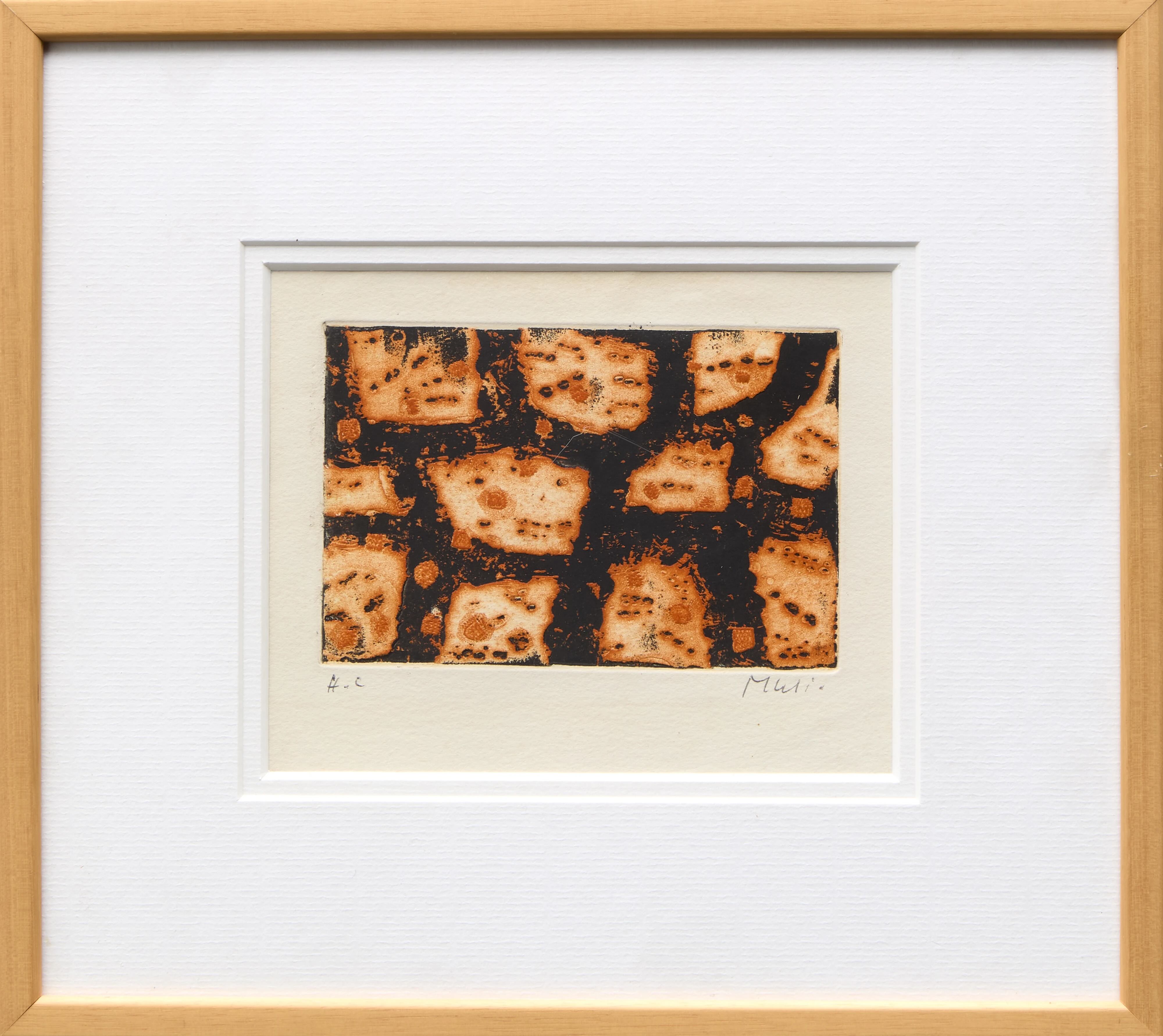
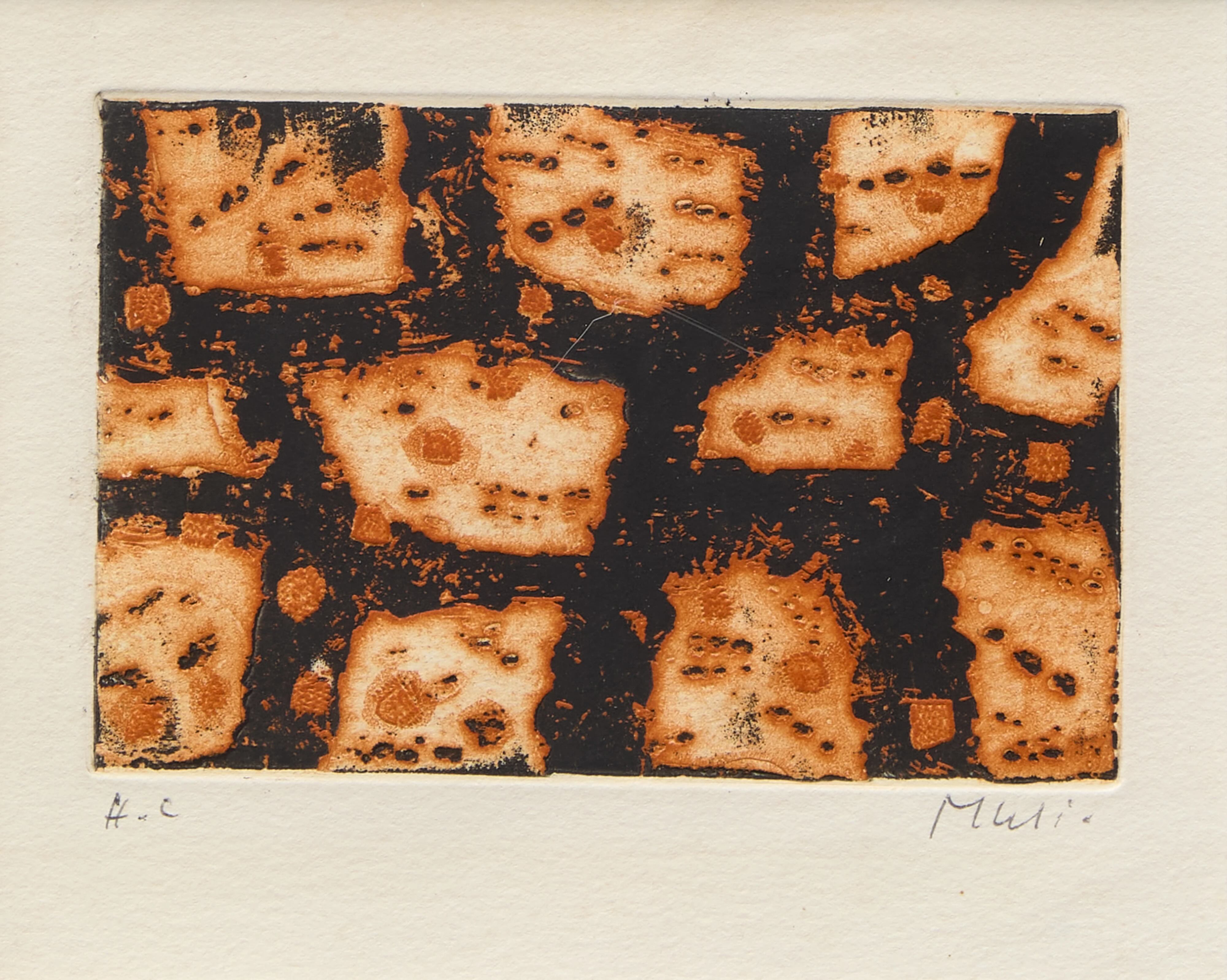
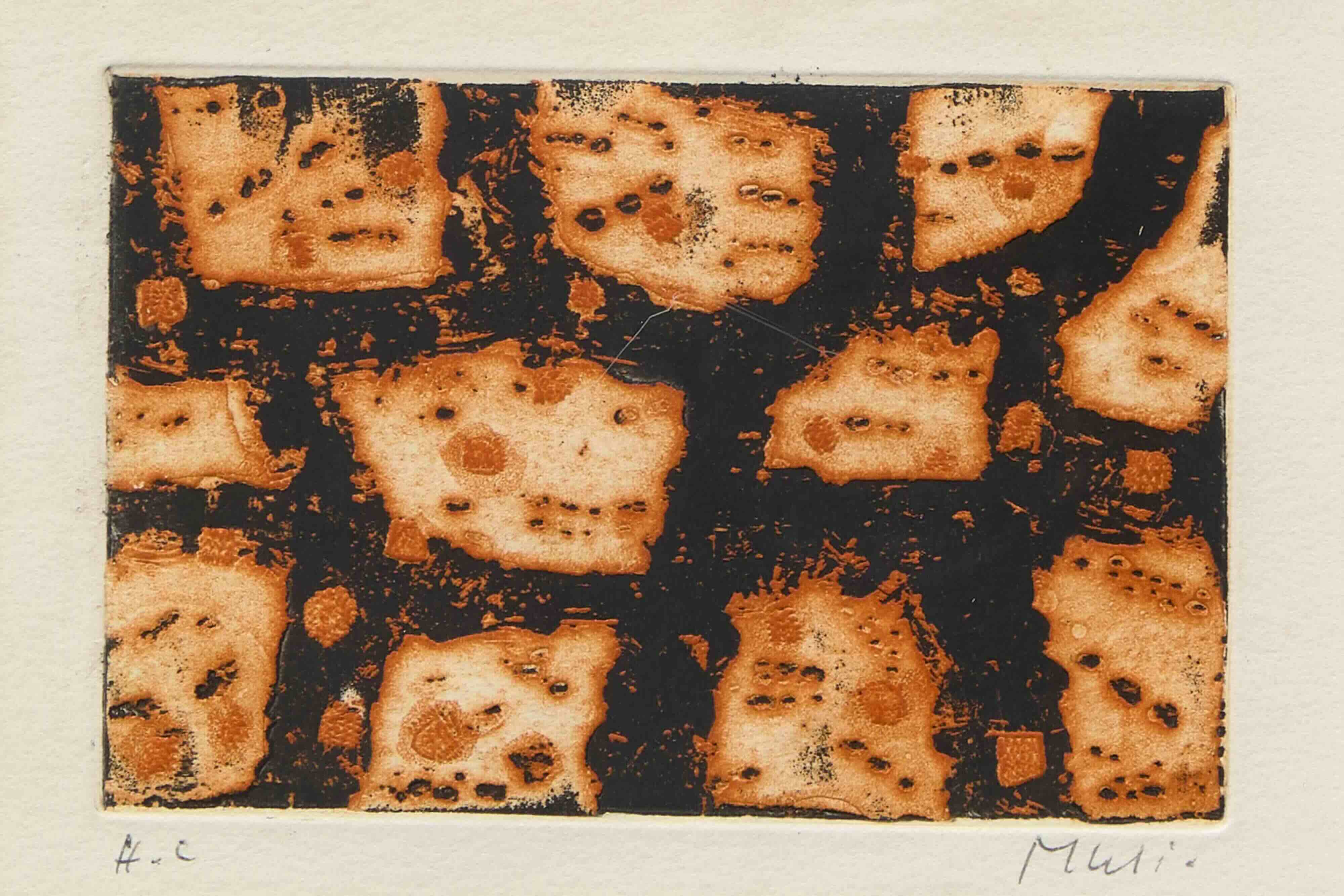
Created in 1959, Terre Adriatique belongs to a period in which Mušič produced some of his best prints. In this work, the modulated colour evokes the dry, stony terrain of the Adriatic coast without describing it literally, and the composition exemplifies the balance between observation and abstraction that defines his work of the late 1950s.
The colours are brilliant, with the print almost luminescent. The small size of the print makes the impression of an active light source more powerful.
This work is signed in pencil, an hors commerce impression aside from the numbered edition. A verso New Year’s greeting signed from himself and his wife, the painter Ida Cadorin Barbarigo, shows it was given by the artist as a personal gift.
Notes:
Etching and aquatint in colours
On wove paper
An Hors Commerce print, inscribed 'HC'
Signed in pencil
Inscribed 'Tanti afettetuoso auguri – Ida Zoran' verso