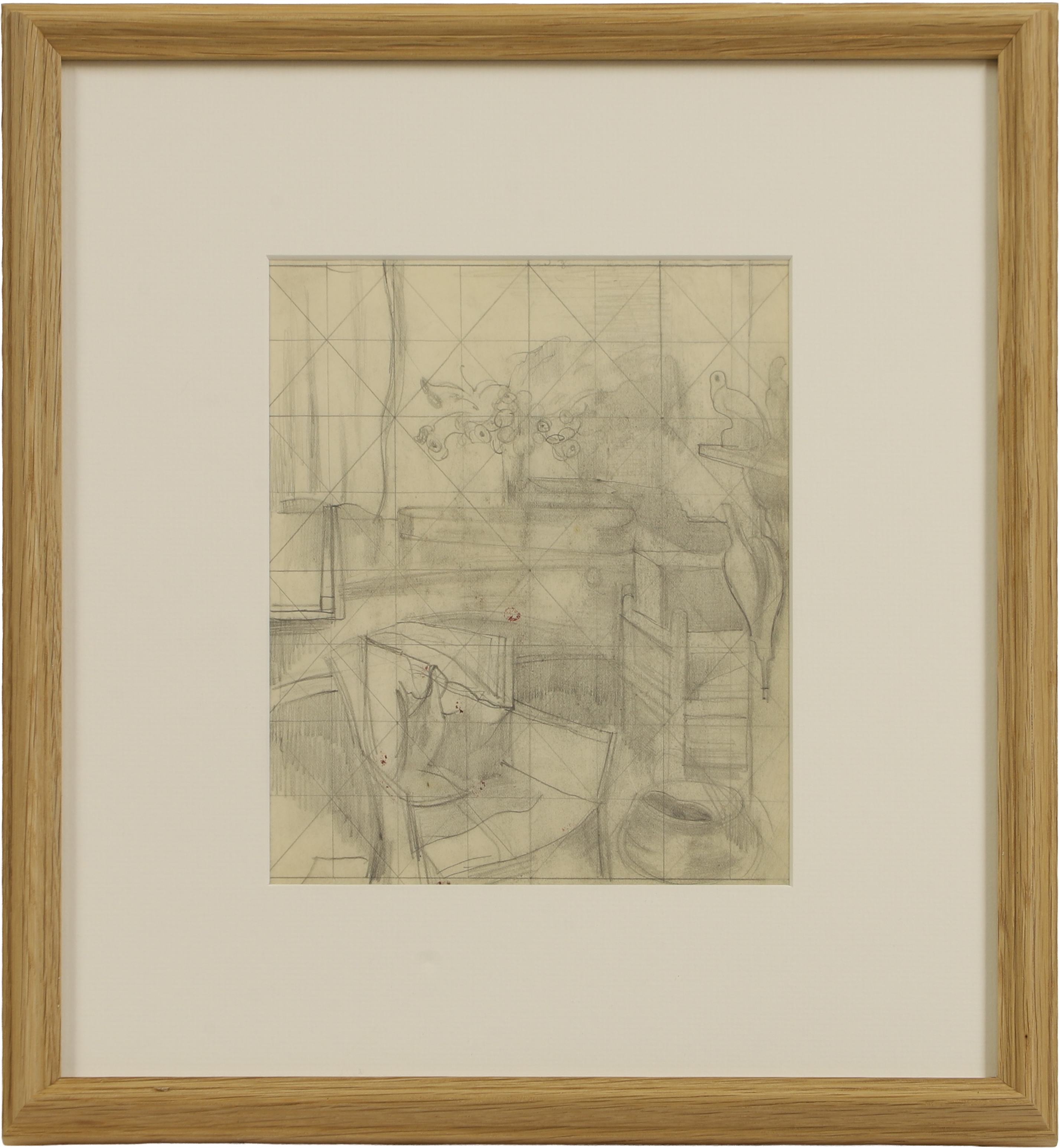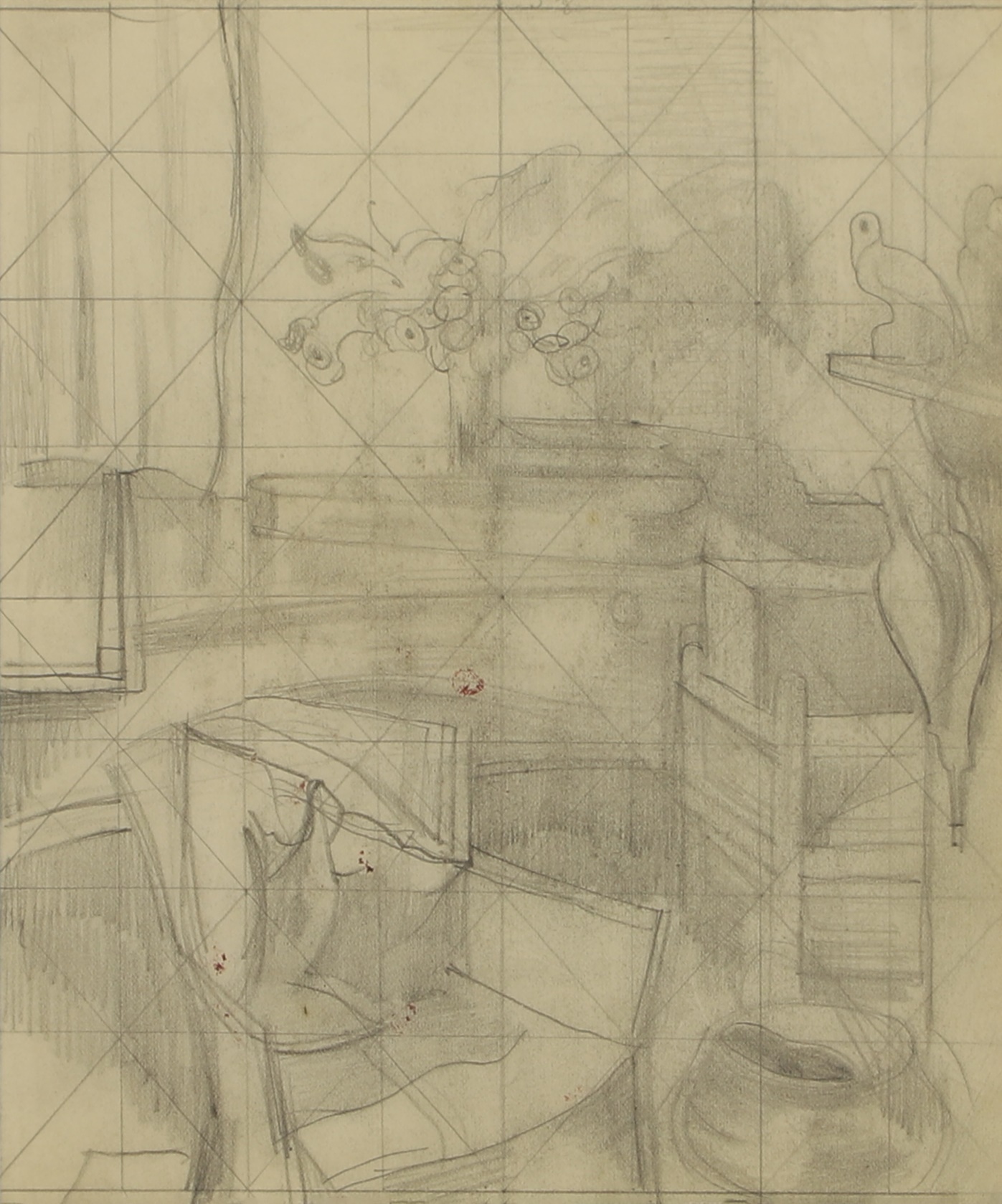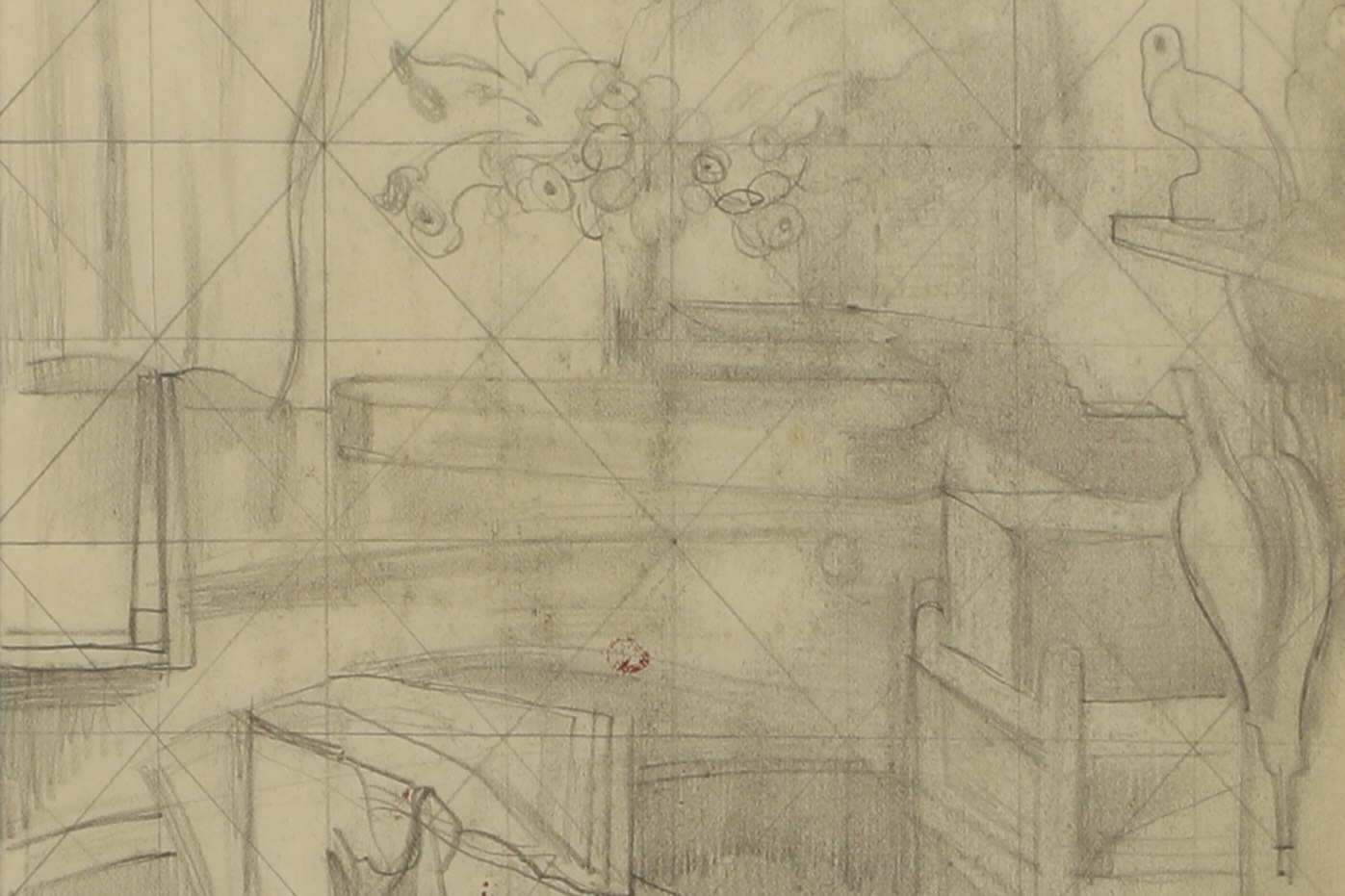
Nash and his wife moved to Lane End House in Buckinghamshire at the beginning of the 1920s. As well as being captured by the surrounding countryside, Nash produced a number of drawings of the cottage interior, including the present work.
This drawing, which is squared for transfer, became a wood-engraving: a copy inscribed ‘No 2’ is held by the V&A. The drawing, more intimate in feel than the print, brings you into the room with Nash, and gives insight to his process.
This quiet domestic scene is a far cry from the war work for which Nash and his older brother Paul are perhaps now most famous. They were both officially appointed as war artists in the First and Second World Wars – two of the only British artists commissioned in both conflicts – and their large oil paintings became some of the most memorable images of the first war.
It can be difficult not to call to mind major works like Oppy Wood and The Menin Road when looking at their later peacetime landscapes. It is also interesting to consider the emotional experience of their war work, coming before large bodies of post-war work. The Imperial War Museum’s Over the Top records the beginning of an attack that left 68 of the 80 men in John Nash’s unit dead or wounded – it is a remarkable work for a 24-year old in all respects and Nash did not manage to produce anything of the same quality in the Second World War.
Despite his early-career connection to war art, John Nash was able to distinguish himself as a book illustrator, botanical artist and painter of landscapes, and enjoyed a highly successful wider career.
In 1967 he became the first living artist to be given a retrospective at the Royal Academy. His works are held by the IWM, Tate, Courtauld Institute and the Government Art Collection.
Provenance:
The John Nash Estate (stamp verso)