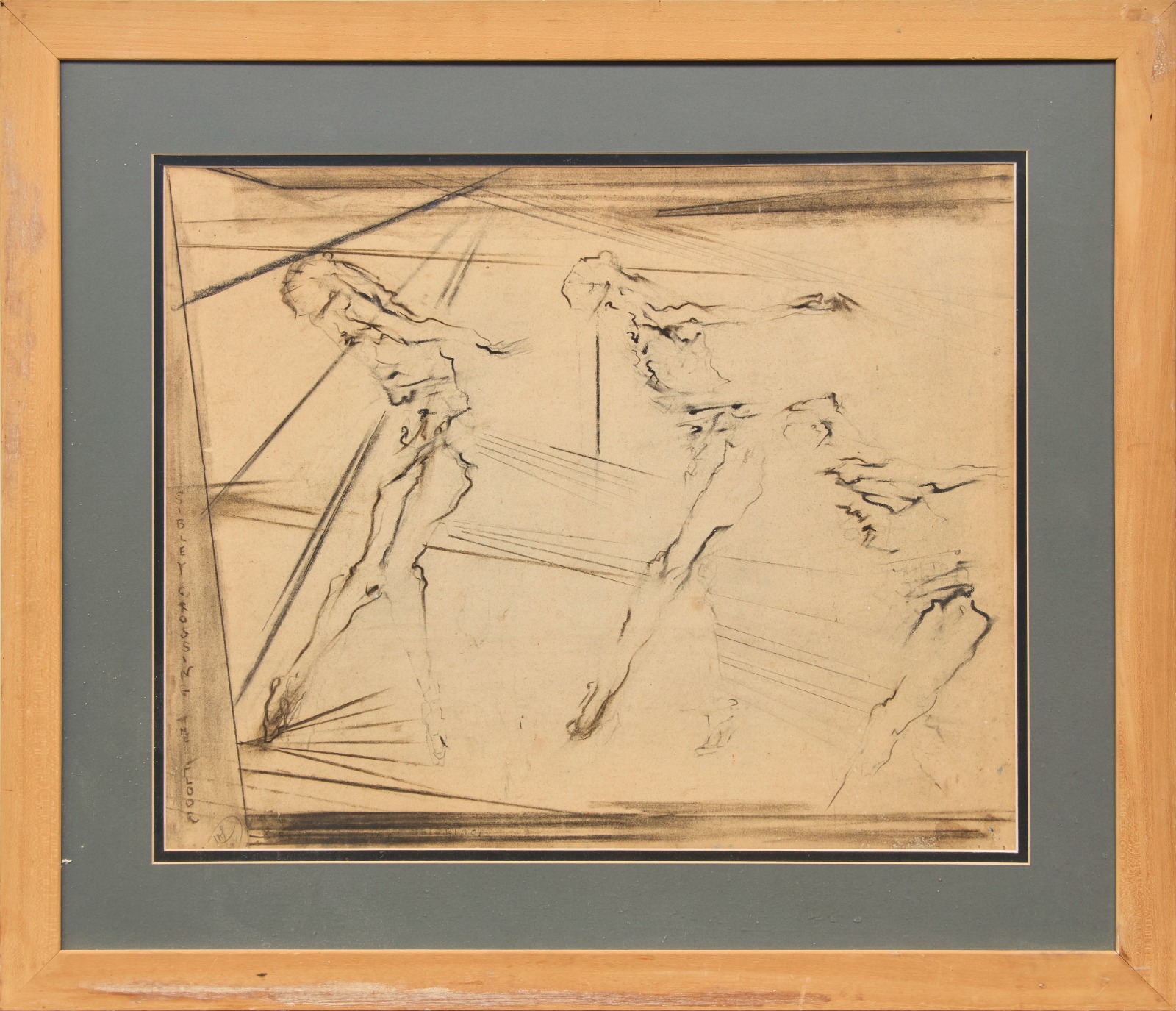
Perhaps one of the greatest muses of 20th century art, Isabel Rawsthorne’s place in art history crystallised with a number of well known Francis Bacon paintings, which followed significant earlier portraits by Jacob Epstein, Alberto Giacometti, André Derain and Pablo Picasso.
Rawsthorne was herself a talented and hugely original artist. She exhibited regularly in her lifetime, including solo shows at the Hanover Gallery and Marlborough Fine Art. She featured prominently in the National Portrait Gallery’s 'Francis Bacon: Human Presence' show in 2024, though her profile might still be higher given the quality of her work and the scale of her ambition.
Perhaps her greatest artistic achievement was her portrayal of dancers: Rawsthorne spent nearly the entire 1950s and 60s preoccupied with ballet, driven by the desire to make ‘portraits in motion’, and through this obsession pioneering a completely original form of ballet art.
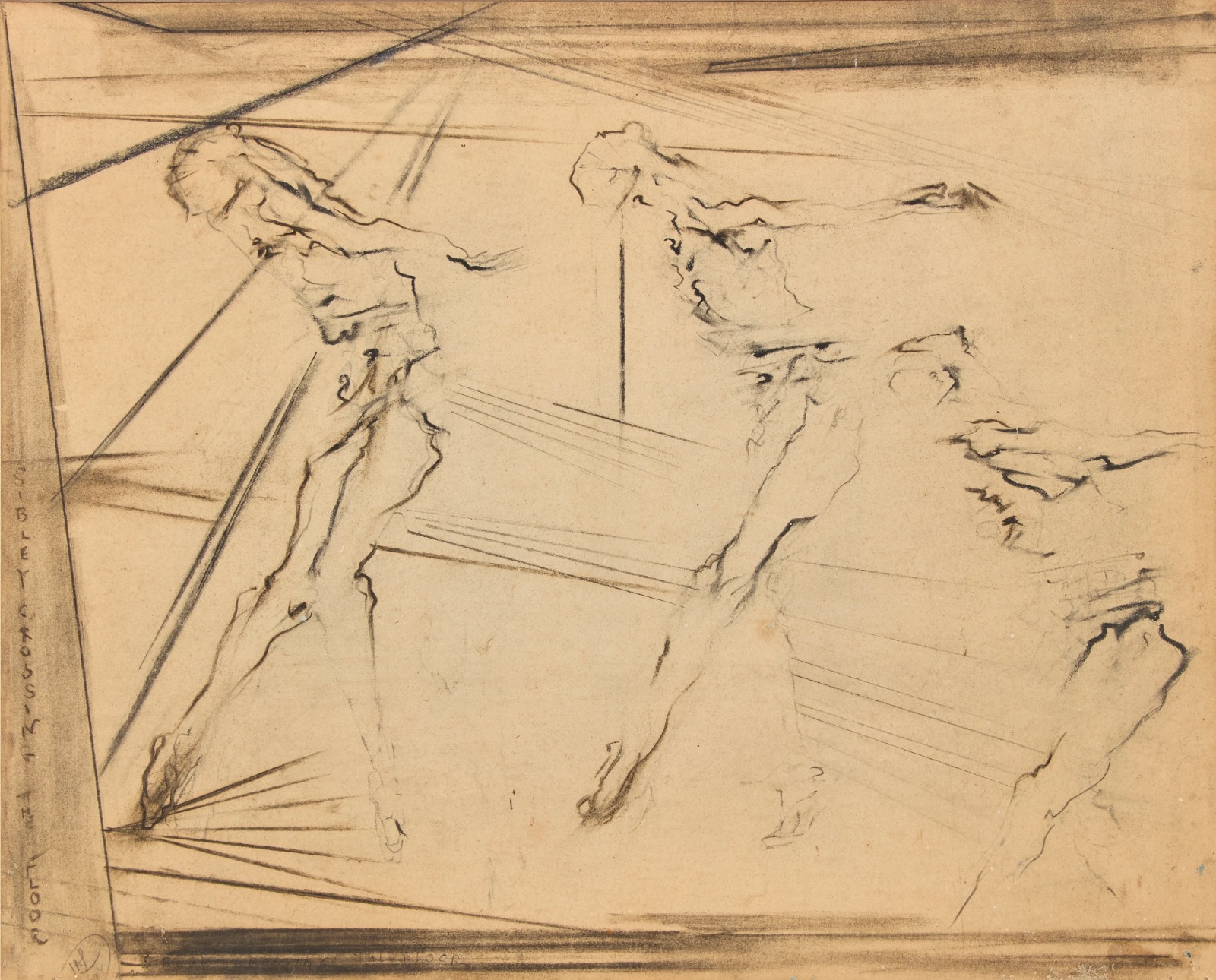
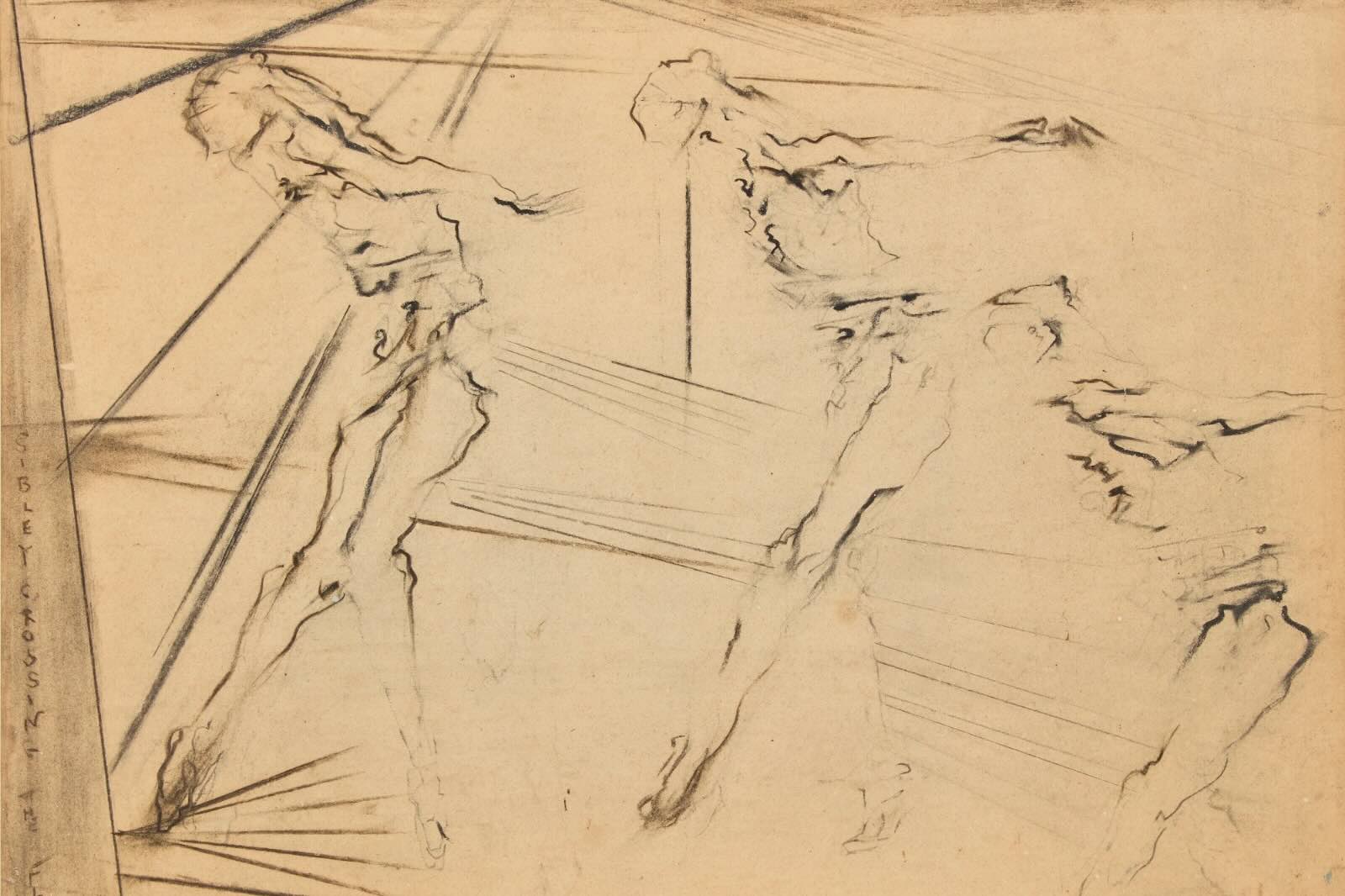
Breaking from the sentimentality of much of the ballet art before her, Rawsthorne’s figures in motion – in this picture, the great Antoinette Sibley – have a ghoulish, ethereal presence. A close friend of Francis Bacon, their shared interests and influence on each other are evident in these figures.
“In the drawings I try to define the excitement of watching a living body in movement. I believe to participate in this excitement it is important to be aware of the skeleton beneath the form, the underlying discipline of the action.”
Rawsthorne’s straight, frame-like Iines (likely depicting the rehearsal studio) contrast with the soft lines of the figures, enhancing the sense of movement and direction. This almost architectural setup, used repeatedly by Rawsthorne, was a device also favoured by Bacon, whose subjects were often framed by cage-like structures.
“Few sights seem to be more mysterious and beautiful than the curve of the spine, running from the base of the skull to the arch of the foot.”
Rawsthorne was closely connected to the ballet, marrying first Constant Lambert, founding music director of the Royal Ballet, and then, after Lambert’s death, composer Alan Rawsthorne. Prior to her intense focus on individual dancers as a subject, she worked on set and costume designs for ballet and opera through the early and mid 1950s. Two excellent examples of her set designs are available through the gallery.